Core Drilling Concrete
Core Drilling Concrete: The Complete Guide to Precision Concrete Cutting
Core drilling concrete is a specialized drilling method used to create clean, perfectly round holes in concrete and reinforced concrete without causing cracks, fractures, or structural damage. Unlike hammer drilling or impact-based methods, core drilling uses diamond-tipped core bits to grind through concrete with precision and control. This process removes a solid cylindrical section of material, known as a core, leaving smooth, exact-diameter openings.
Core drilling concrete is the preferred solution in commercial construction, residential building, civil engineering, plumbing, electrical, HVAC, mechanical installation, and infrastructure projects. When accuracy, safety, and structural integrity matter, core drilling is the industry standard.
What Is Core Drilling Concrete?
Core drilling concrete is a controlled cutting process that uses a rotating diamond core bit to penetrate concrete surfaces. The bit cuts through the material gradually instead of breaking it apart, which prevents surface damage and internal cracking. As the drill advances, it extracts a solid core rather than pulverizing the concrete.
This technique is ideal for creating openings for pipes, conduits, ducts, anchors, and utility lines. Because the drilling action produces minimal vibration, it is safe for use in both new construction and existing structures.
How Core Drilling Concrete Works
Core drilling concrete works by combining steady rotational force with diamond cutting technology. The diamonds embedded in the core bit grind through concrete aggregates and cement paste under consistent pressure. This controlled cutting action allows the bit to move smoothly through the material.
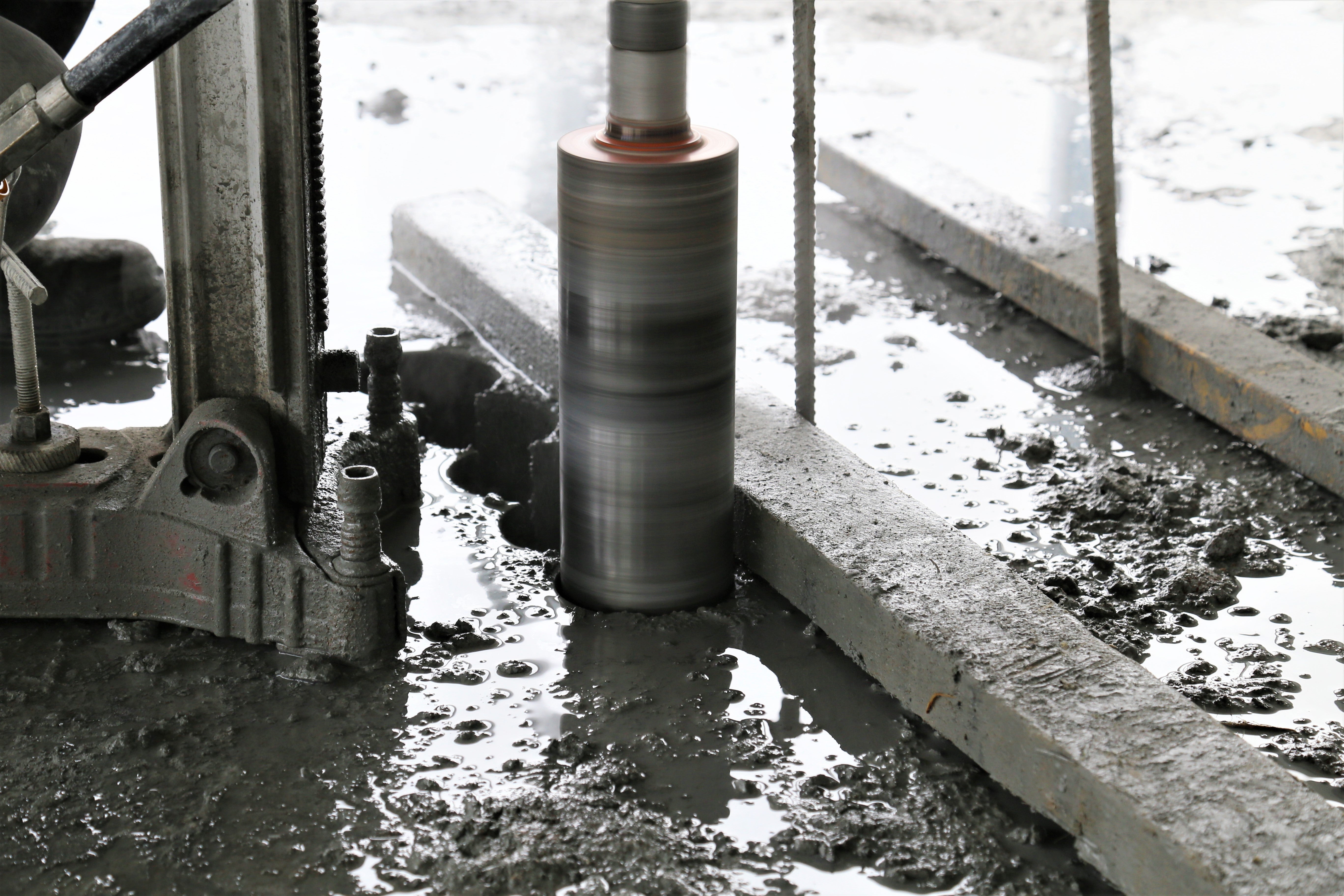
Most concrete core drilling applications use water during the drilling process. Wet core drilling cools the bit, reduces friction, suppresses airborne dust, and flushes debris out of the hole. The result is faster drilling, cleaner edges, longer bit life, and safer working conditions.
As drilling progresses, a cylindrical core is removed from the concrete, leaving behind a precise, smooth-walled hole with minimal surface disruption.
Types of Concrete Core Drilling Methods


Wet Core Drilling Concrete
Wet core drilling is the most common and effective method for drilling concrete. Water is supplied directly to the cutting surface to cool the diamond segments and control dust. This method is ideal for reinforced concrete, thick slabs, and structural drilling where precision and cleanliness are critical.
Dry Core Drilling Concrete
Dry core drilling is used when water is not available or permitted. It is typically reserved for lighter concrete, block, or masonry materials. Dry drilling requires specialized bits designed to dissipate heat and manage dust through ventilation slots.
Handheld Core Drilling Concrete
Handheld core drilling is used for smaller-diameter holes and shallow depths. This method is common in plumbing, electrical, and HVAC installations where portability and quick setup are important.
Rig-Mounted Core Drilling Concrete
Rig-mounted core drilling offers maximum accuracy and stability. The drill is anchored to the concrete surface using bolts or vacuum bases, allowing for straight, deep, and large-diameter holes. This method is preferred for structural concrete, reinforced slabs, and heavy commercial or industrial projects.
Core Drilling Reinforced Concrete
One of the biggest advantages of core drilling concrete is its ability to cut through reinforced concrete. Diamond core bits are designed to grind through both concrete and embedded steel rebar without damaging surrounding material.
This makes core drilling ideal for structural applications where traditional drilling methods could weaken the concrete or cause cracking. Core drilling reinforced concrete ensures clean penetrations while preserving load-bearing integrity.
Materials Involved in Concrete Core Drilling
Concrete core drilling can be performed on a wide range of concrete types and related materials, including:
-
Reinforced concrete with steel rebar
-
Standard poured concrete
-
Precast concrete panels
-
Concrete block and masonry
-
Post-tension slabs (with proper scanning)
-
Structural slabs and foundations
With the correct equipment and preparation, core drilling concrete can be safely performed in virtually any construction environment.
Common Applications of Core Drilling Concrete
Core drilling concrete is used across many industries and project types. In construction, it is essential for creating openings for plumbing pipes, electrical conduits, HVAC ducting, and fire sprinkler systems.
Mechanical and industrial contractors use concrete core drilling for equipment mounting, ventilation penetrations, and facility upgrades. In civil engineering and infrastructure projects, core drilling is used for bridge decks, roadway installations, utility access points, and anchoring systems.
Because the process generates minimal vibration, it is especially suitable for hospitals, schools, data centers, and occupied buildings where noise and structural disturbance must be minimized.
Choosing the Right Equipment for Core Drilling Concrete
Selecting the right equipment is critical for successful concrete core drilling. The diameter and depth of the hole determine the size of the core bit and the power required from the drilling system. Larger holes and deeper penetrations require higher torque and stable mounting.
The type of concrete also matters. Reinforced concrete requires diamond bits designed to cut through steel, while softer concrete may use different segment bonding. Wet drilling is generally preferred for concrete due to better cooling and dust control.
Proper anchoring or secure handling of the drill ensures straight, accurate holes and reduces the risk of bit binding or equipment damage.
Advantages of Core Drilling Concrete
Core drilling concrete offers several advantages over traditional drilling and cutting methods. Precision is one of the most important benefits, as core drilling produces exact-diameter holes with smooth edges. This eliminates the need for additional finishing or corrective work.
Reduced vibration protects surrounding concrete and prevents cracking or spalling, especially in structural and reinforced applications. Dust control is another major advantage, particularly with wet drilling, which improves safety and visibility on the jobsite.
Core drilling is also efficient and repeatable, making it ideal for projects that require multiple penetrations with consistent results.
Safety Considerations for Concrete Core Drilling
Safety is a critical aspect of core drilling concrete. Before drilling begins, the concrete should be scanned to locate embedded utilities, cables, or post-tension cables. Drilling into hidden obstructions can cause serious safety hazards and structural damage.
Operators should wear appropriate personal protective equipment, including eye protection, gloves, and hearing protection when required. Water flow must be properly regulated during wet drilling to prevent overheating and excessive bit wear.
Maintaining steady pressure and allowing the bit to cut at its own pace reduces the risk of equipment damage and ensures clean results.
Maintenance and Longevity of Core Drilling Equipment
Proper maintenance ensures consistent performance and long service life when core drilling concrete. After each use, equipment should be cleaned to remove slurry, dust, and debris. Allowing buildup to remain can reduce efficiency and accelerate wear.
Diamond core bits should be inspected regularly for segment wear and replaced when cutting performance declines. Using correct drilling speed, adequate water flow, and controlled pressure significantly extends bit life and improves drilling quality.
Environmental and Structural Benefits of Core Drilling Concrete
Core drilling concrete is considered one of the most environmentally and structurally responsible drilling methods. Because it removes material cleanly and precisely, it produces less waste and minimizes damage to surrounding structures.
The low-vibration process helps preserve concrete integrity and reduces noise pollution, making it suitable for sensitive environments and urban construction projects. Cleaner cuts also reduce the need for repairs or reinforcement after drilling.
Core Drilling Concrete FAQs
What is core drilling concrete used for?
Core drilling concrete is used to create precise, round holes in concrete for plumbing, electrical, HVAC, fire sprinkler, and structural applications.
Can core drilling cut through reinforced concrete?
Yes, diamond core drilling can cut through both concrete and embedded steel rebar without damaging surrounding material.
Is wet core drilling better than dry core drilling for concrete?
Yes, wet core drilling is generally preferred for concrete because it cools the bit, reduces dust, and extends tool life.
Does core drilling damage concrete structures?
No, core drilling produces minimal vibration and stress, making it one of the safest methods for drilling into existing concrete structures.
What hole sizes can be achieved with core drilling concrete?
Core drilling can produce a wide range of hole sizes, from small conduit openings to large-diameter penetrations for piping and ventilation.
Is core drilling concrete safe for occupied buildings?
Yes, because it generates low noise and vibration, core drilling is commonly used in hospitals, schools, and occupied facilities.
How deep can concrete core drilling go?
With the proper equipment, core drilling can penetrate very thick concrete slabs and foundations.
Do I need to scan concrete before core drilling?
Yes, scanning is strongly recommended to locate rebar, utilities, and post-tension cables before drilling.
Core drilling concrete is the most precise, reliable, and structurally safe method for creating openings in concrete. Its clean cutting action, versatility, and low-impact performance make it an essential process in modern construction, infrastructure, and industrial projects.
- Tags
- Buy Core Drill Bits Online from HubShopUSA.com: The Complete Guide
- Core Bit
- Core Bit Drill
- Core Bits
- Core Drill and Bit
- Core Drill Bits
- Core Drill Machine
- Core Drill Milwaukee
- Core Drilling Concrete
- Core Drilling Machine
- coring
- Diamond Core Drill Bits For Concrete
- Drill Cores
- Dry Core Bits For Concrete
- Milwaukee Core Drill
- The Best Core Bits
- Wet vs Dry Core Drill Bits